Original: $1.22
-65%$1.22
$0.43The Story
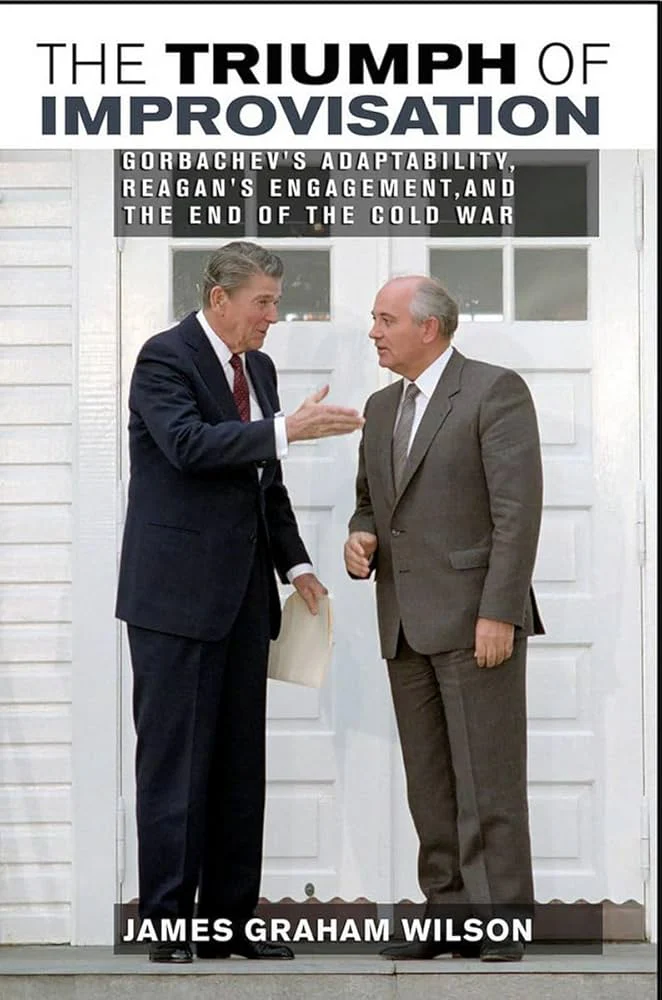
Drawing on deep archival research and recently declassified papers, Wilson argues that adaptation, improvisation, and engagement by individuals in positions of power ended the specter of a nuclear holocaust. Amid ambivalence and uncertainty, Mikhail Gorbachev, Ronald Reagan, George Shultz, and George H. W. Bush―and a host of other actors―engaged with adversaries and adapted to a rapidly changing international environment and information age in which global capitalism recovered as command economies failed.
Eschewing the notion of a coherent grand strategy to end the Cold War, Wilson paints a vivid portrait of how leaders made choices; some made poor choices while others reacted prudently, imaginatively, and courageously to events they did not foresee. A book about the burdens of responsibility, the obstacles of domestic politics, and the human qualities of leadership, The Triumph of Improvisation concludes with a chapter describing how George H. W. Bush oversaw the construction of a new configuration of power after the fall of the Berlin Wall, one that resolved the fundamental components of the Cold War on Washington's terms.
Description
Drawing on deep archival research and recently declassified papers, Wilson argues that adaptation, improvisation, and engagement by individuals in positions of power ended the specter of a nuclear holocaust. Amid ambivalence and uncertainty, Mikhail Gorbachev, Ronald Reagan, George Shultz, and George H. W. Bush―and a host of other actors―engaged with adversaries and adapted to a rapidly changing international environment and information age in which global capitalism recovered as command economies failed.
Eschewing the notion of a coherent grand strategy to end the Cold War, Wilson paints a vivid portrait of how leaders made choices; some made poor choices while others reacted prudently, imaginatively, and courageously to events they did not foresee. A book about the burdens of responsibility, the obstacles of domestic politics, and the human qualities of leadership, The Triumph of Improvisation concludes with a chapter describing how George H. W. Bush oversaw the construction of a new configuration of power after the fall of the Berlin Wall, one that resolved the fundamental components of the Cold War on Washington's terms.